Shoestring Senders: What Volunteer-Run Nonprofits Know About Email That Silicon Valley Doesn't
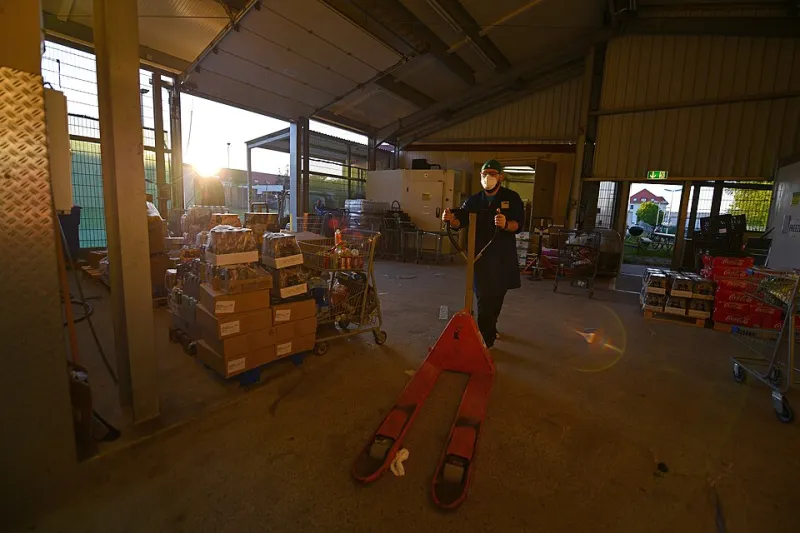
Photo: U.S. Army photo by Jason Johnston, Public domain, via Wikimedia Commons
Every few months, a vendor rolls out another AI-powered engagement engine promising to 'optimize the subscriber journey.' Meanwhile, in a church basement in Ohio and a food pantry in Albuquerque, a volunteer named Diane is pasting addresses into a spreadsheet and answering every single reply by hand.
Guess whose emails land in the primary inbox more often?
The Constraint Advantage
There is a stubborn pattern in email marketing that rarely makes it into product launch keynotes: the practices that enterprise platforms automate are the same practices that, done manually, produce better results. Small nonprofits — the ones with no budget, no dedicated marketer, and often no one under sixty touching the send button — frequently run cleaner programs than companies spending six figures on martech.
The reasons are structural. When you cannot afford to blast 40,000 people, you don't. When a reply is guaranteed to be read by a human, you write like one. When every dollar of list growth came from a paper signup sheet at the farmers market, you treat that list like the irreplaceable asset it is.
Deliverability in 2025 punishes exactly the behaviors that budgets enable: high-volume sends to cold segments, no-reply addresses, engagement decay left unaddressed. Constraints remove the temptation.
Manual Segmentation, Volunteer Edition
Ask a small nonprofit how they segment and you'll rarely hear about behavioral triggers. More often you'll hear something like: 'We have three lists — the Sunday regulars, the occasional helpers, and the donors who moved away but still care.'
That's crude, but it works, because it's based on genuine relationship knowledge rather than inferred click data. The volunteer maintaining the list knows that Mrs. Alvarez opens everything but never gives online, so she gets the print-friendly version. They know the young volunteers respond to Friday texts-forwarded-as-emails, so those get short, casual notes.
The transferable tactic: replace one demographic segment with one relationship segment. If you can't articulate why a group of subscribers would personally care about your next email, don't send it to them.
The Reply Team Nobody Talks About
A surprising number of effective small-organization email programs are really two programs: the broadcast and the conversation. A retired teacher handles replies on Tuesday mornings. A board member takes anything marked 'urgent.' Nothing sits unanswered longer than a day or two.
This matters more than it appears. Mailbox providers increasingly weigh two-way engagement — replies, replies answered, messages moved out of spam — as a signal of legitimate sending. A nonprofit with 800 subscribers and 30 replies per send is, from Gmail's perspective, a healthier sender than a retailer with 80,000 subscribers and a no-reply address.
Even a two-person 'reply team' changes the math. Answer real mail, from a real address, and watch how quickly spam-folder placement becomes a non-issue.
Free Tools, Used Ruthlessly Well
The nonprofit stack is unglamorous: a free tier of a mainstream email platform, a shared spreadsheet, a Google Voice number, maybe a donation processor's built-in receipts. What distinguishes the effective ones is not the tooling but the discipline around it.
Three habits worth stealing:
1. The quarterly cull. Volunteers who inherited the list from a predecessor have no emotional attachment to dead addresses. They remove non-openers every few months without ceremony. Enterprise senders agonize over this; small organizations just do it. Engagement rates rise, spam traps stop biting, and the remaining list actually wants the mail.
2. One sender, one voice. Because the same person usually writes every issue, tone stays consistent in a way that committee-produced corporate email rarely achieves. Readers can identify the sender the way they'd recognize a letter from a friend — which is precisely how filtering algorithms want to evaluate you.
3. Plain text by default. Without a designer on staff, the template temptation never takes hold. The result is email that renders everywhere, loads instantly, and looks like correspondence rather than advertising.
What Funded Teams Should Learn
None of this argues that nonprofits have superior strategy in the abstract. Many would benefit from better analytics, proper onboarding flows, and list-growth infrastructure. The argument is narrower and sharper: the behaviors that constraints force — small sends, real replies, frequent pruning, a consistent human voice — are the behaviors that inbox algorithms and human readers now reward most.
The uncomfortable implication for well-resourced marketing teams is that their stack may be insulating them from these behaviors rather than enabling them. Automation makes it possible to never read a reply. Scale makes it possible to never prune. Budget makes it possible to keep sending to people who stopped caring two years ago.
The church basement doesn't have that option. It turns out the church basement is fine.


